From Market to Table: A Day of Slow Food in Taipei
Posted Date:2025-11-06
Updated:2026-01-20
Popularity
1458
With the summer heat lingering past the Chushu solar term, how can home cooks serve up the most fitting dishes for Taiwan's sweltering season? This daily dilemma plagues kitchens across the island. Chinese culinary traditions offer countless cooking techniques, and as we find ourselves in prime "cold-tossed" season, the quest to discover seasonal produce and kitchen inspiration becomes paramount. From premium supermarkets and budget chain stores to neighborhood traditional markets, each channel holds its own treasures. But for truly "zheshi" ingredients-a Taiwanese Hokkien expression meaning "in season" or "suited to the moment"-traditional markets remain the shortest bridge between farm and table.

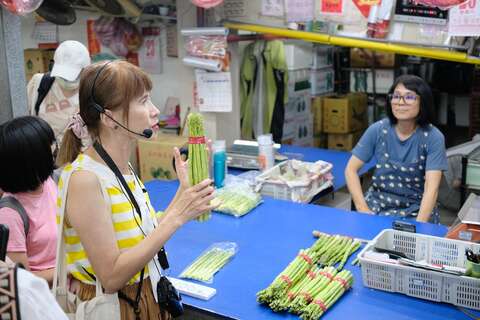
Food writer Fan Hung-Hua leads participants through a walking tour of Taipei's First Wholesale Market.
◗ A Daily Dose of Something Good
Sporting a yellow-striped tank top and relaxed khaki trousers, she's greeted warmly by market vendors calling out, "Teacher Fan-Fan, you're here!" Fan Hung-Hua radiates the same bright energy as her outfit. Long before the food and farming tour participants gathered, she'd arrived at Taipei's First Wholesale Market (hereafter "First Market") by 7 a.m., already navigating the produce and seafood sections. This isn't just a treasure trove of ingredients-it's Taiwan's largest wholesale market by trading volume. She opens the day's program with a simple mantra: "We should eat at least one 'good thing' every day." In an era dominated by fast food on one end and overly refined dining on the other, what exactly qualifies as a "good thing"?
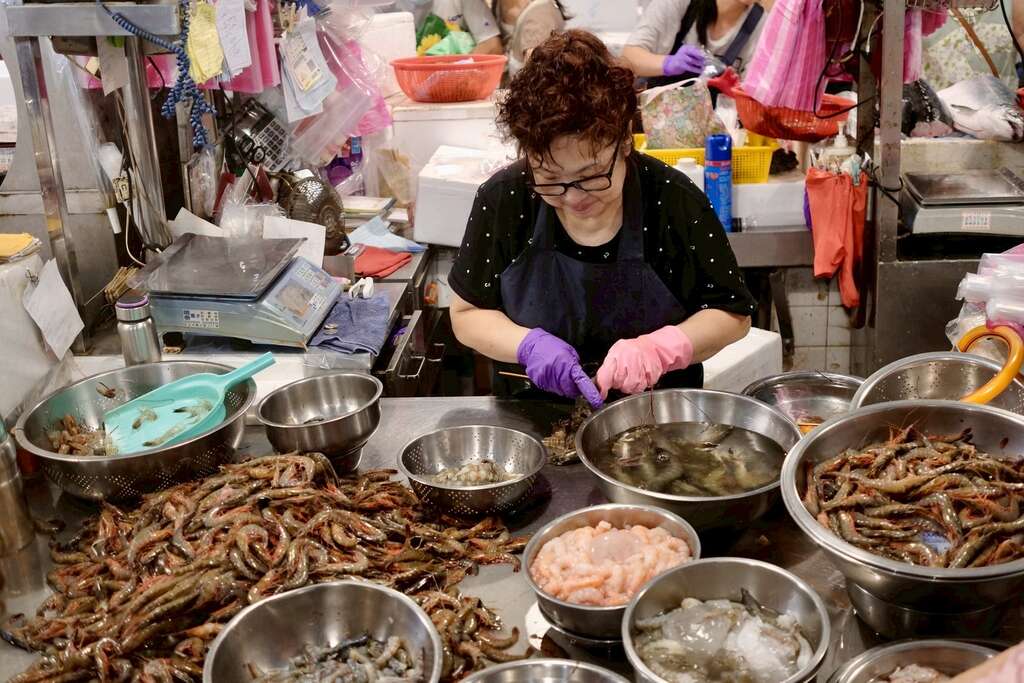
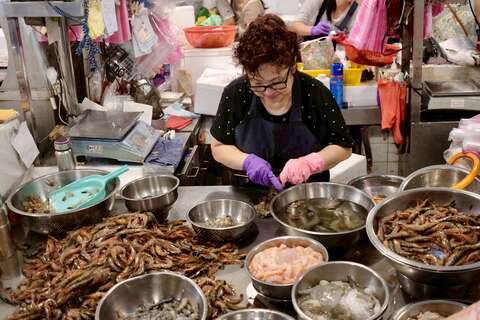
The Lee sisters run one of the most famous fresh shrimp stalls at Taipei's Fish Market, beloved by restaurants and home cooks alike for their hand-peeled shrimp service.
Are Japanese snow crab, Norwegian salmon, or French truffles "good things"? Perhaps, if we're measuring by price tag or rarity. But true goodness rests on simplicity and economy-there's no single answer. What's clear, though, is that local ingredients reduce our environmental footprint, and seasonal produce offers the greatest benefits. These advantages extend beyond cutting carbon emissions from international shipping; they also reward our palates. Taiwan, a bountiful island nation straddling the subtropical zone, is surrounded by ocean and neighbors the world's great spice-producing regions. Generations of immigrants have woven together a tapestry of culinary traditions here. Rather than chasing foreign food trends, we have every reason to embrace our own abundant harvests with confidence.

First Market offers many specialty local ingredients rarely found in chain supermarkets, such as fresh figs.
◗ A Treasure Hunt Through First Market
Teacher Fan navigates the market aisles with nimble ease, explaining to participants: "Every vendor here is an expert in their particular ingredient." Take asparagus vendors alone-they offer domestic varieties alongside imports from Peru and Mexico. Picking up a bundle of crisp, verdant stalks, she shares selection tips: look for straight spears, tightly closed tips, and bases free of browning. Her descriptions conjure the clean, sweet taste of chilled asparagus salad.
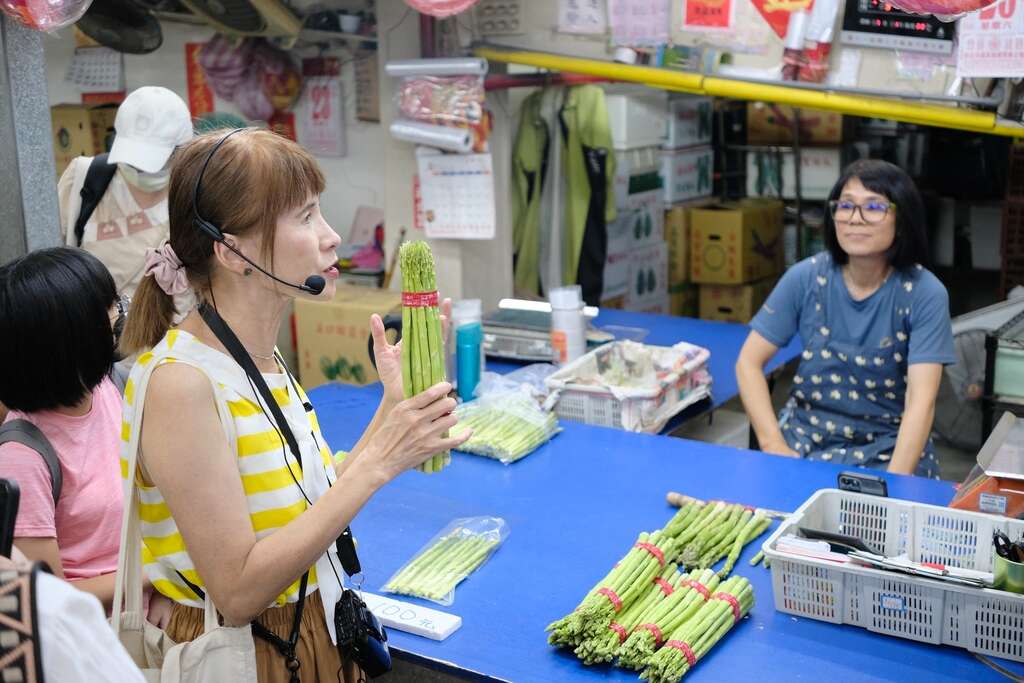
Asparagus vendors offer multiple varieties for customers to choose from, all of exceptional quality. Near closing time, only a few bundles remain on the tables.
As noon approaches, the morning's bustling energy has dissipated, though pedestrians and scooters still weave through the lanes. We arrive at the lotus root specialist's stall just before closing. Roots still dusted with a thin layer of earth are stacked casually on the table, and the vendor's family demonstrates encyclopedic knowledge of their product. Teacher Fan adds that keeping lotus roots in their earthy state is actually an antioxidation trick-simply wash and peel them just before cooking.

The vendor shares lotus root cooking tips, sparking lively discussion among participants.
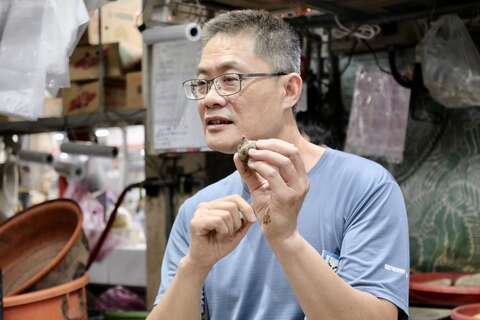
Just as Teacher Fan mentions that this family represents the most passionate "lotus growers" she's ever encountered, the vendor produces a handmade display board from behind the counter. It details every part of the lotus plant and its culinary applications-nothing goes to waste. Even within a single lotus root, the top, middle, and bottom sections offer different textures suited to different preparations. The common seven-hole variety is starchy and soft, ideal for soups, while the nine-hole variety is crisp and tender, perfect for cold dishes or quick stir-fries.
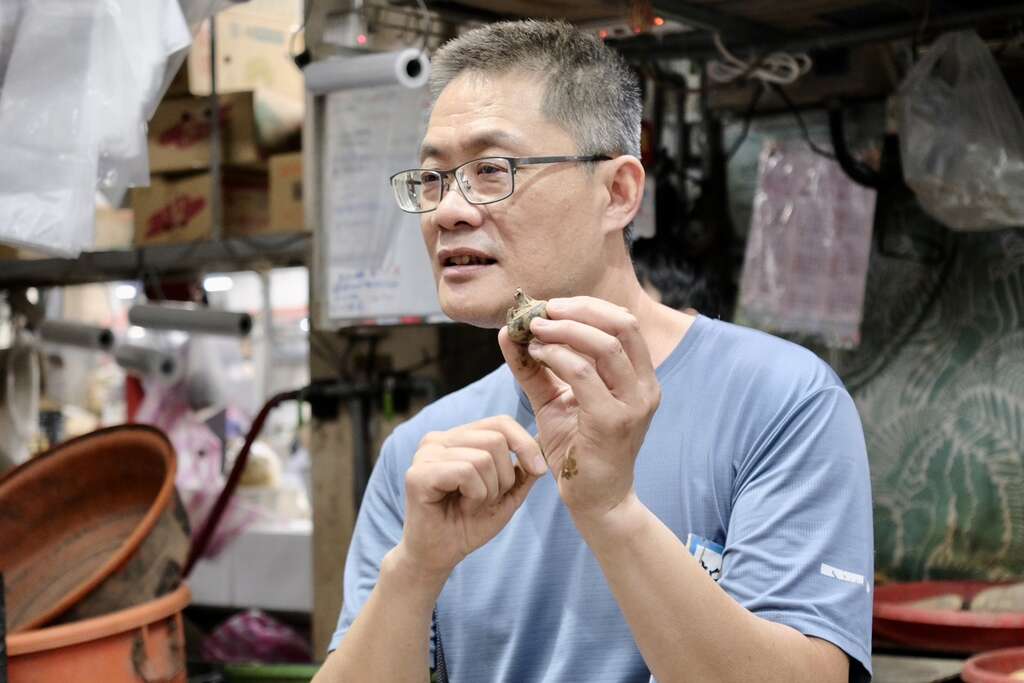
Due to the challenges of cultivation and storage, Taiwanese-grown water chestnuts are quite rare.
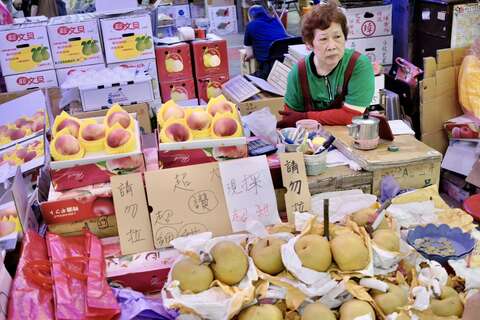
Beyond the interactive expertise of ingredient masters, First Market conceals many specialty items that chain supermarkets simply can't provide. Take water chestnuts-that source of satisfying crunch in Taiwanese "chicken rolls"-now primarily cultivated in Changhua and Chiayi due to the labor-intensive harvesting and storage difficulties. Then there's the avocado, dubbed "forest butter" in the Asian food renaissance, with Taiwan's own "Tainong No. 1" (red-skinned) and "Tainong No. 2" (green-skinned) varieties representing homegrown excellence. The impressively sized "Ganlu" pear stands as another proud newcomer to Taiwan's fruit kingdom. Armed with curiosity and a shopping cart, visitors to First Market will leave with baskets overflowing.
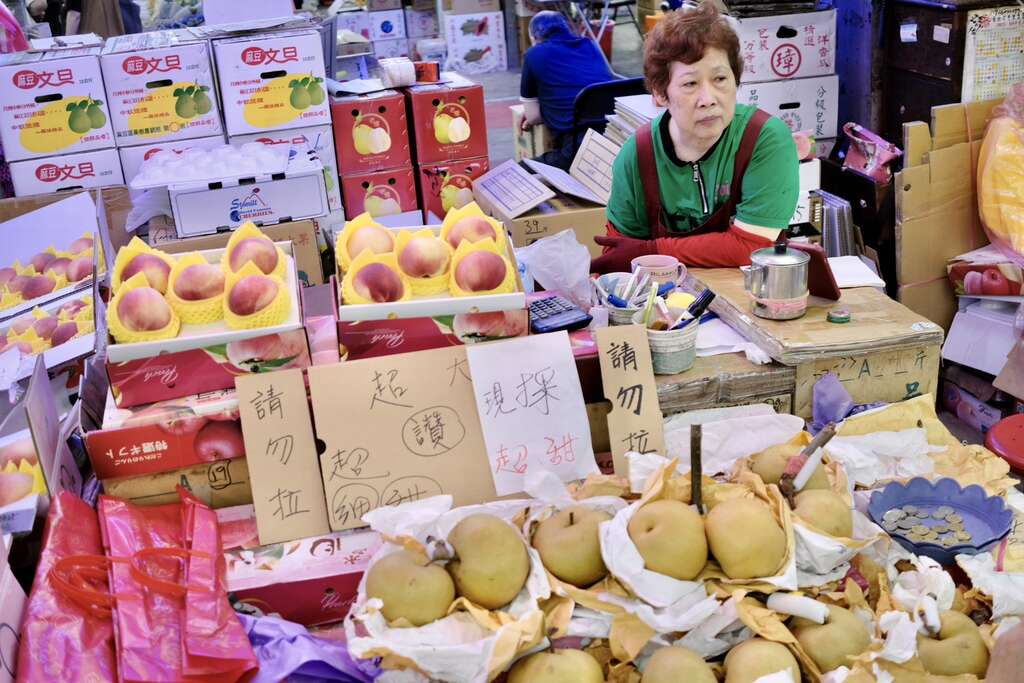
Taiwan's Ganlu pears at the fruit stall dwarf nearby peaches with their impressive size and heft (bottom right).
◗ A Michelin-Worthy Feast
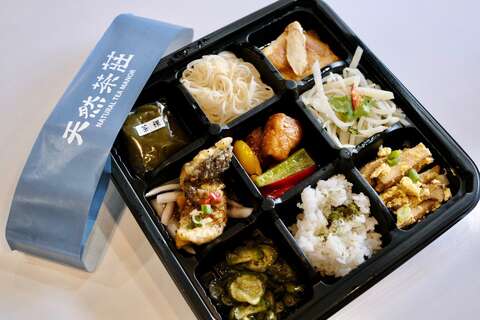
As shopping bags grow heavier, participants wrap up their purchases and head to a culinary studio in Dadaocheng to enjoy a custom bento from Nature Tea Manor(天然茶莊), featured in the Taiwan Michelin Guide 2025. Presented in a stylish nine-compartment grid bursting with color, the signature tea oil noodles and tea-infused rice cakes live up to their names-each bite releases waves of tea fragrance. The rice cakes, in particular, deliver an intense aroma with a wonderfully chewy yet non-sticky texture. Participants savor each morsel with delight, accompanied by Teacher Fan's emphatic endorsement: "You absolutely must try this-it's incredibly delicious."
Related Reading: Nature Tea Manor | Selling Tea, Rice, Smiles, and Philosophy
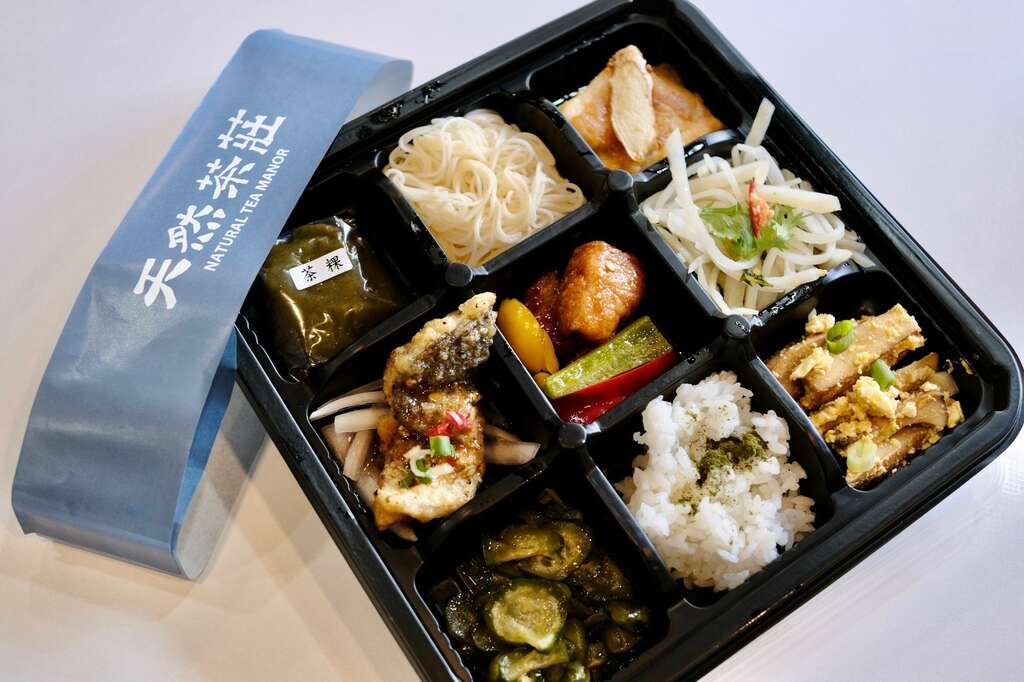
The custom bento from Nature Tea Manor, featured in the Taiwan Michelin Guide, delivers on taste, aroma, and presentation.
◗ A Journey Through Spice and Time
Once a thriving hub for dried goods trade, Dadaocheng keeps its heritage alive today through the beloved Lunar New Year street market, and remains northern Taiwan's go-to destination for dried ingredients-from herbs and spices to seafood and preserved fruits. Among the competing shops, UtoPia Spices has elegantly reimagined the former "Yi Chang Food Store." Push open its café-style door, and an entire wall of spices greets you.
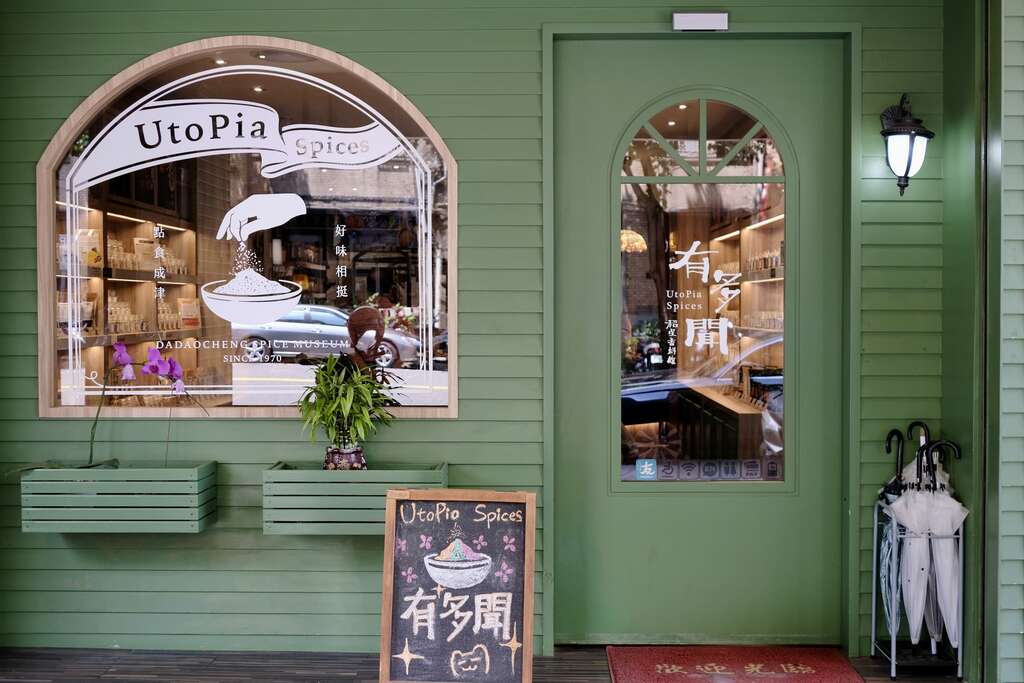
UtoPia Spices features a trendy, café-inspired façade.
Today, spices are the finishing touch for home cooking, but in pre-medieval Europe, they served an entirely different purpose. Without refrigeration, Europeans relied on salting and smoking to preserve meat, but also turned to spices for their antibacterial properties, elevating these aromatics to prized table essentials. Yet spices primarily grew in Southeast Asia, South Asia, and Central Asia, requiring long, expensive journeys to reach European markets.
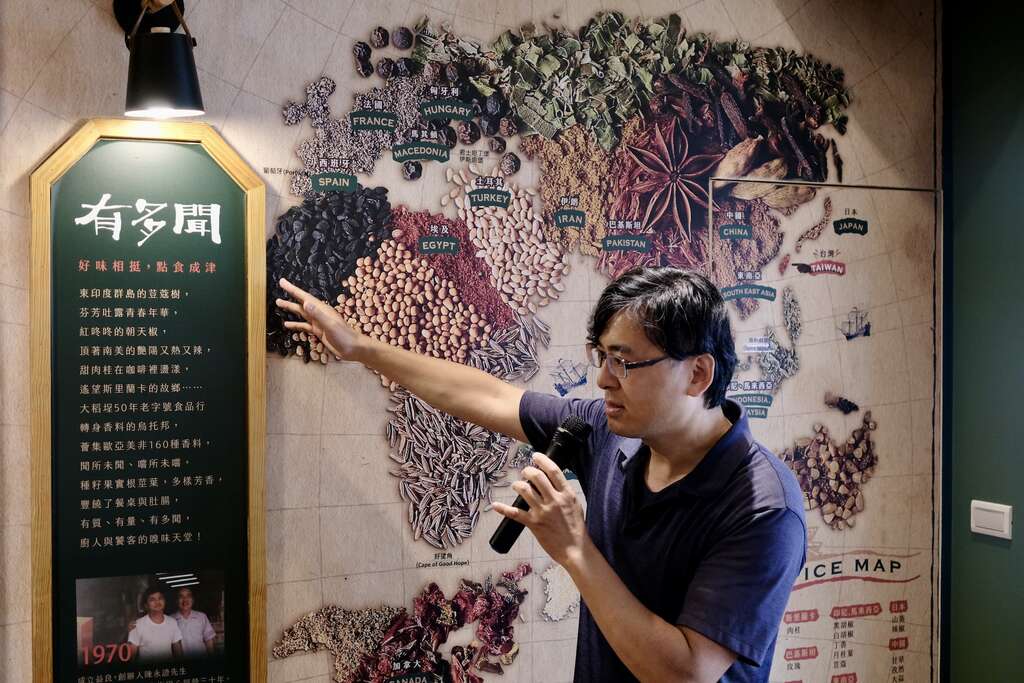
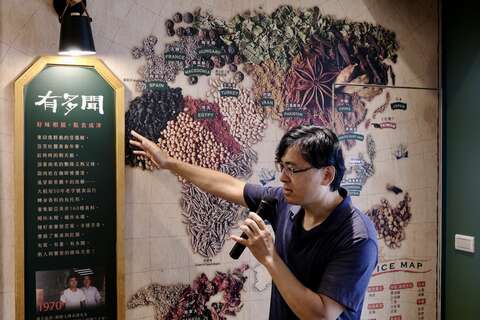
UtoPia Spices proprietor Lee Kuei-Yu explains the history of the global spice trade to participants.
The European hunger for spices drove nations to seek maritime routes, ultimately igniting the Age of Exploration. While Taiwan was never a core player in the spice trade, its strategic location made it a vital waystation for East Asian international commerce. From Dutch and Spanish colonization to Qing dynasty trade and the 19th-century boom of Dadaocheng, Taiwan gradually wove itself into the fabric of global trade.
"When Tamsui opened as a treaty port in 1860-with the port extending up the Tamsui River to Bangka-the old Dadaocheng wharf stood just behind where UtoPia Spices is now," explains proprietor Lee Kuei-Yu, who speaks like a living encyclopedia of world spice history. He traces the journey from European spice commerce to Taiwan's role in the international system, ultimately bringing the narrative home to Dadaocheng itself. With this, participants complete their "spice lesson"-a journey where knowledge and flavor intertwine. With ingredients assembled and a newfound understanding of spices, it's time for participants to roll up their sleeves and take to the kitchen.

UtoPia Spices displays numerous aroma jars, inviting visitors to experience and discover new scents.
◗ Hands-On in the Food and Farming Kitchen

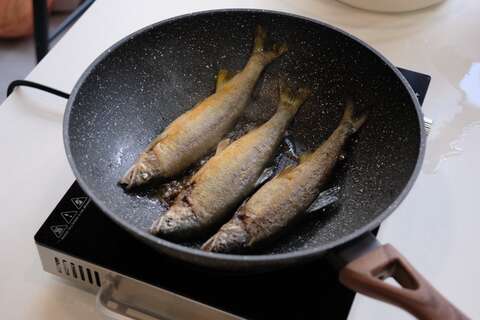
The scent gland along the ayu's spine releases subtle notes reminiscent of melon and cucumber.
The first cooking challenge: pan-seared ayu (sweetfish). This fish, notoriously picky about water quality, represents the elegant side of Japanese summer and autumn cuisine. Inhale near the scent gland on a fresh fish's back-you may detect faint hints of melon or cucumber. The delicate flesh, paired with the distinctive bittersweet notes of its organs, creates an utterly captivating flavor profile.
Participants begin by rinsing away the slime, sprinkling on a light dusting of salt, then carefully patting the fish dry. As oil heats in the pan, the fish hits the surface with a satisfying sizzle, filling the air with fragrance. Once the underside turns golden, it's time to carefully flip, searing until both sides achieve that golden, lightly crisp finish. The pan-seared ayu becomes a fresh summer tableau all its own.
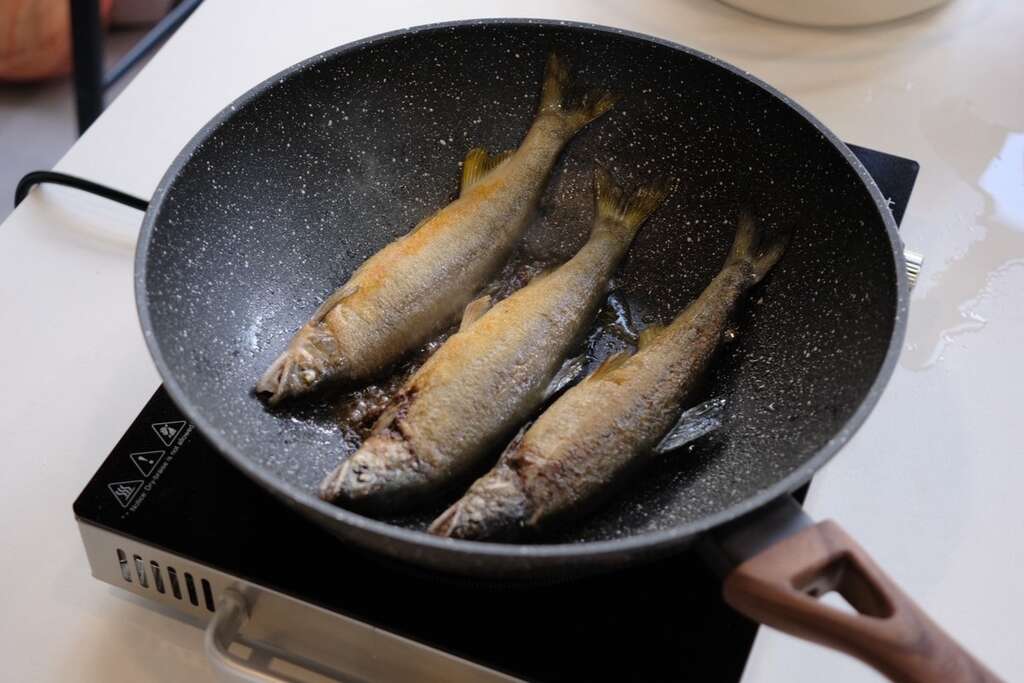
Golden pan-seared ayu-an appetite awakener.
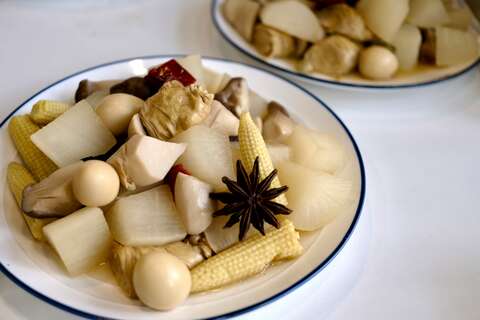
Next, Teacher Fan reveals her vegetable braised dish secret recipe: dried chilies, cloves, star anise, cinnamon, white peppercorns, and cardamom. First, melt rock sugar until it reaches amber, then pour in rice wine and soy sauce to combine. Add the various spices and water, then simply add your favorite vegetables and simmer over low heat-the flavors unfold from there. Unlike the rich, sweet-savory profile typical of Taiwanese braised dishes, this version preserves the vegetables' natural character while adding subtle, aromatic spice notes. It tastes even better after a night in the refrigerator.
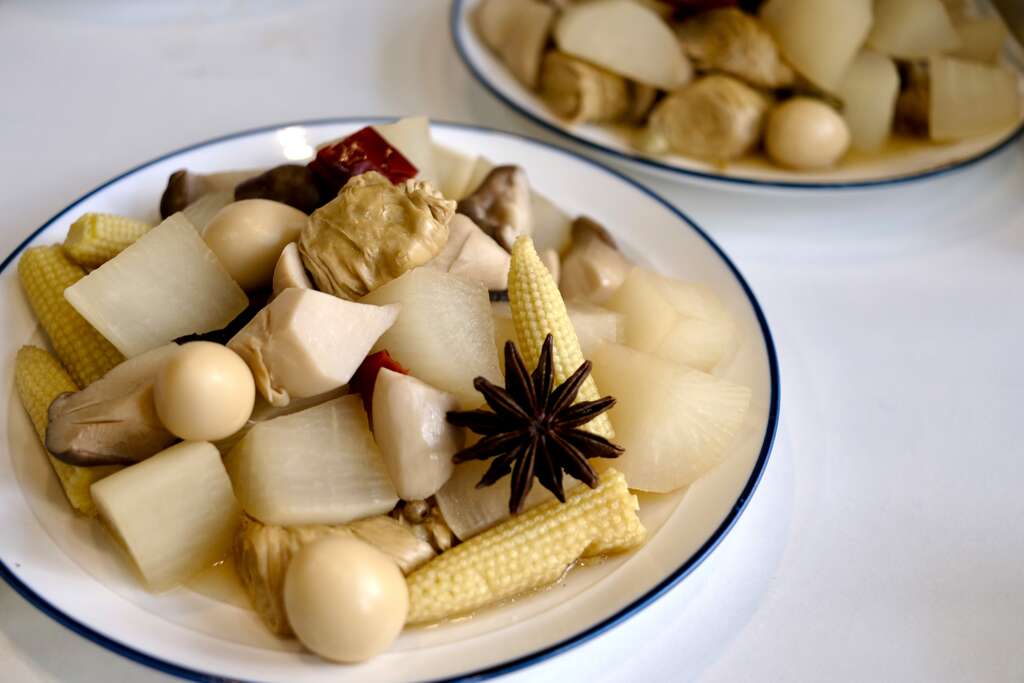
The braised vegetables can be customized with your preferred fresh produce.
As afternoon arrives, Teacher Fan s the day's quota for eating "good things" has been met.
The international "Slow Food" movement Note 1 isn't about leisurely dining-it's about conscious choosing. Just as hidden gems lurk in traditional markets and upscale supermarkets alike, they also hide behind complex issues. Cage-free or conventional eggs? Deep-sea or coastal catch? Local or air-freighted vegetables? In this age of abundance, consumption itself becomes a form of advocacy. And traditional markets remain the ideal arena for practicing slow food principles.
If you have the chance, grab a shopping cart and roll up your sleeves! First Market's entrance beckons. Sample the Dongshi Ganlu pear sliced by the fruit vendor. Listen to the produce seller extol the crunch of Chiayi water chestnuts. Taste Taiwan's foothills and coastlines in your everyday cooking-savor that rich essence of terroir.
---
Note 1 The "Slow Food" movement was founded by Italian Carlo Petrini in 1986 as a counterweight to fast food culture. Its core principles-"good, clean, and fair"-champion fresh seasonal ingredients, quality dining experiences, and fair trade practices.
◗ Shop Information
Nature Tea Manor(天然茶莊)
Address: No. 30, Lane 380, Xidian Road, Xizhi District, New Taipei City
Hours: 11:00-15:00, 17:00-21:00 (Closed Monday-Friday)
Phone: 02-2660-3762
More: Nature Tea Manor Facebook, Nature Tea Manor Website
UtoPia Spices (有多聞稀辛香料館)
Address: No. 104, Xining N. Rd., Datong District, Taipei City
Hours: 9:00-19:00 (Closed Sundays)
Phone: 02-2558-2020
More: UtoPia Spices Facebook, UtoPia Spices Website
This content was translated by AI. Please refer to the original text if you have any concerns.
Photos