Savoring Taiwan | Pingtung Cacao's Extraordinary Adventure
Posted Date:2024-10-08
Updated:2026-01-20
Popularity
600
Pingtung Cacao's Remarkable Journey
The cacao tree originates from the Amazon rainforests of South America and is a plant that thrives in tropical climates, with its ideal growing range centered on the equator, extending roughly between 20 degrees north and south latitude. These regions typically have warm and humid climates, abundant rainfall, and high temperatures, providing ideal growing conditions. Therefore, cacao tree cultivation is limited globally, mainly distributed in tropical regions such as Africa, Latin America, and Southeast Asia.
These major producing regions provide most of the world's cacao beans and are the lifeblood of the chocolate industry. However, in recent years, climate change has led to rising temperatures and frequent droughts, severely affecting the growing environment for cacao trees and causing production to decline. Particularly in early 2024, reduced production caused cacao bean prices to surge, impacting the industry and putting pressure on consumers facing rising chocolate product prices.
A Century-Old Attempt
Few people know that Taiwan, in the 21st century, is also one of the cacao bean producing regions, with quality that has been recognized. The history of cacao cultivation in Taiwan can be traced back to 1922, when the Japanese introduced cacao trees from Java, Indonesia for trial planting, hoping to cultivate high-quality cacao beans in Taiwan. Even the renowned food company Morinaga & Co. established cacao plantations in the border area between Pingtung and Taitung, with the founder personally visiting Taiwan to inspect the site.
However, Taiwan's climate conditions were still different from Java after all, with lower winter temperatures and relatively backward agricultural technology at the time, making some cultivation challenges insurmountable. Therefore, the trial planting results were not ideal, and the cacao plantations were subsequently abandoned. The most obvious trace left from previous attempts is a village called "Morinaga" on the old South-Link Highway from Taitung to Pingtung, not far from the county border. Every time I drive by, it reminds me of sweet milk candies.
The cacao tree originates from the Amazon rainforests of South America and is a plant that thrives in tropical climates, with its ideal growing range centered on the equator, extending roughly between 20 degrees north and south latitude. These regions typically have warm and humid climates, abundant rainfall, and high temperatures, providing ideal growing conditions. Therefore, cacao tree cultivation is limited globally, mainly distributed in tropical regions such as Africa, Latin America, and Southeast Asia.
These major producing regions provide most of the world's cacao beans and are the lifeblood of the chocolate industry. However, in recent years, climate change has led to rising temperatures and frequent droughts, severely affecting the growing environment for cacao trees and causing production to decline. Particularly in early 2024, reduced production caused cacao bean prices to surge, impacting the industry and putting pressure on consumers facing rising chocolate product prices.
A Century-Old Attempt
Few people know that Taiwan, in the 21st century, is also one of the cacao bean producing regions, with quality that has been recognized. The history of cacao cultivation in Taiwan can be traced back to 1922, when the Japanese introduced cacao trees from Java, Indonesia for trial planting, hoping to cultivate high-quality cacao beans in Taiwan. Even the renowned food company Morinaga & Co. established cacao plantations in the border area between Pingtung and Taitung, with the founder personally visiting Taiwan to inspect the site.
However, Taiwan's climate conditions were still different from Java after all, with lower winter temperatures and relatively backward agricultural technology at the time, making some cultivation challenges insurmountable. Therefore, the trial planting results were not ideal, and the cacao plantations were subsequently abandoned. The most obvious trace left from previous attempts is a village called "Morinaga" on the old South-Link Highway from Taitung to Pingtung, not far from the county border. Every time I drive by, it reminds me of sweet milk candies.

A hundred years ago, Taiwan had already attempted to cultivate cacao.
A Fresh Start in the 21st Century
Despite the failed attempt nearly a century ago, cacao made a comeback in the 21st century, becoming a shining new star in Pingtung. Pingtung has always been a major agricultural county in Taiwan, sparing no effort in updating and experimenting with cultivation techniques for various crops.
In 2002, under the premise of soil and water conservation, the government encouraged farmers who originally grew betel nuts to abandon their plantations and switch to other cash crops. Pingtung farmers seized this opportunity and began trial planting cacao trees under betel nut trees. Pingtung's climate conditions, combined with the shaded environment provided by betel nut plantations, were favorable for cacao tree growth. Betel nut and cacao trees coexisting on the same piece of land became a unique sight in local farms.
Some farmers initially had a last-ditch mentality - after all, betel nut trees are tall and don't conflict much with newly planted cacao trees. Perhaps after the cacao trees grew a bit taller, they would decide the fate of the betel nut trees. However, people later discovered that Pingtung's environment was quite suitable for growing cacao trees, and their economic value was higher than betel nuts, thus sparking a trend of "abandoning betel nuts for cacao."
As a result, the traditional betel nut industry gradually transformed into a high value-added cacao industry. This change also gave hope to young people who had no aspirations for "going home to grow betel nuts," creating opportunities to attract young people working elsewhere to return to farming, accelerating local agricultural transformation and flourishing development.
In addition to support from the Soil and Water Conservation Bureau of the Council of Agriculture at the time, since the emerging cacao plantations were mainly concentrated in the "Liudui" Hakka township belt of Pingtung, the Hakka Affairs Department of the Pingtung County Government also played a behind-the-scenes role, guiding cacao farmers to transform Hakka villages into a chocolate kingdom.
Apart from the "77 Chocolate Republic" established by Hong Ya Foods in Taoyuan, which grows cacao trees indoors for guided tours, Pingtung is likely the northernmost region in the world where cacao tree orchards are distributed.

High value-added cacao has changed the rural landscape of Pingtung.
Pingtung Cacao's Unique Charm
Today, Pingtung County, with its unique climate conditions, has become the county with the largest cacao cultivation area in Taiwan. Currently, the cacao tree cultivation area exceeds 300 hectares, with related industries attracting over a hundred farming households, and nurturing more than thirty distinctive chocolate brands. From Gaoshu Township in northern Pingtung to the Hengchun Peninsula in the south, traces of the cacao industry can be seen throughout Pingtung County.
It's not just about quantity; there are highlights in terms of value as well. Criollo, which originally only grew in places like Venezuela and Peru in Central America, is the finest among various cacao beans, but its production accounts for only 3-5% of the global cacao bean market, making it relatively rare and expensive. Surprisingly, Pingtung farmers have successfully grown Criollo cacao beans, not only enriching Taiwan's cacao varieties but also injecting new opportunities into Taiwan's chocolate industry development.
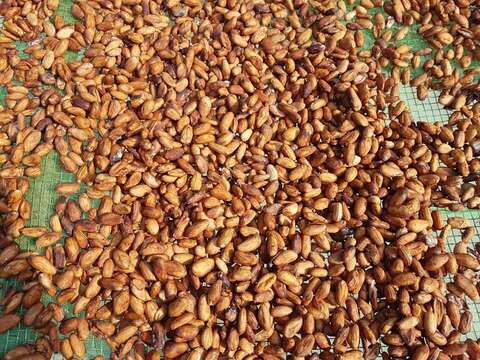
After cacao fruits are harvested from the trees, the cacao beans still need to go through a series of complex processing procedures including fermentation, drying, roasting, crushing, and refining before becoming the chocolate we are familiar with. Given the characteristics of the cacao industry, if farmers simply focus on growing cacao trees, the economic benefit of harvested but unprocessed cacao fruits is quite limited.
Moreover, in terms of the final flavor of chocolate, every step in the processing has a critical impact. To make Pingtung's cacao industry more competitive, local farmers have actively cooperated with government, industry, and academia to establish a complete industry chain. From cacao tree cultivation, cacao fruit harvesting, to subsequent processing, product development, and marketing channels, systematic planning has been carried out.

Taiwan's cacao industry has developed a complete system from cultivation, harvesting, processing, product development, to marketing.
Through the integration of marketing cooperatives, farmers scattered across various locations can share resources and face the market together. Modernized processing plants have not only solved the previous difficulties of independent collection but also improved the processing quality of cacao beans. Today, cooperatives can process over 250 tons of cacao fruits annually, providing stable raw material supply for downstream chocolate processing industries. Additionally, the Department of Food Science at National Pingtung University of Science and Technology has established a GMP-standard cacao processing plant, continuously improving cacao bean processing technology and cultivating needed talents for the local area.
Pingtung's cacao has risen to prominence, creating another "black gold" legend in Taiwan's beverage market beyond tea and coffee.
This content was translated by AI. Please refer to the original text if you have any concerns.
Photos