Ocean Encounter: Qian Gu - Tales of Tug-of-War with the Sea
Posted Date:2025-01-02
Updated:2026-01-20
Popularity
314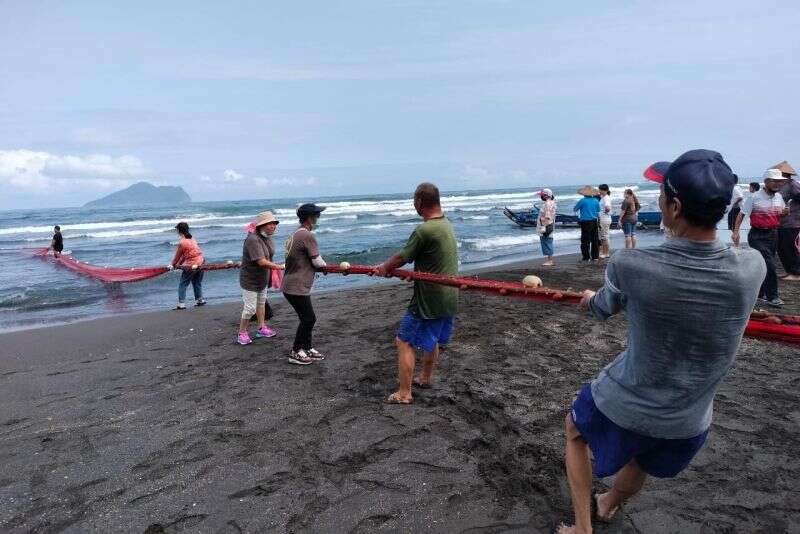
For most people, "fishing" seems to mean having to board a fishing boat and go out to sea, but actually, standing on the shore and playing tug-of-war with the sea gives you a chance to get the freshest catch! Today, in Jinshan and Wanli in New Taipei, Xinwu in Taoyuan, and the shores of Toucheng and Zhuangwei in Yilan, there are still opportunities to experience this fishing method where people unite together and share the catch without going out to sea.
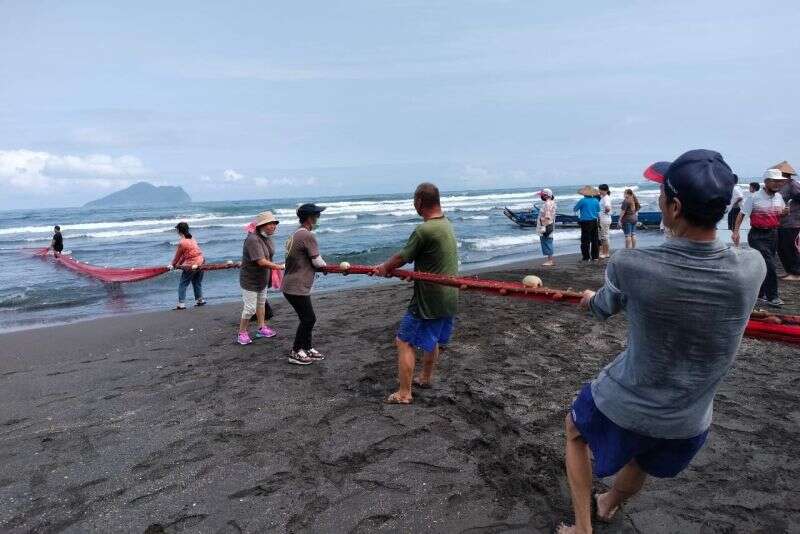
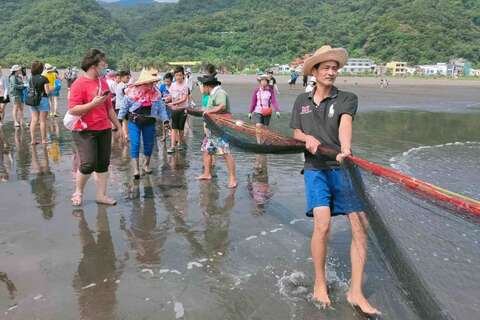
Qian Gu is a traditional fishing method that requires the collective strength of many people (Photo provided by Yilan County Toucheng Township Gangkou Community Development Association)
The Qian Gu Tradition: Sharing Fish by the Rope
Qian Gu is a fishing method that was common along the coasts of Taiwan, Penghu, and Matsu in earlier times, possibly brought from the Zhangzhou and Quanzhou areas of Fujian over 200 years ago. However, this traditional fishing method gradually declined in the 1960s due to the rise of fishing boats and the exodus of fishing village populations.
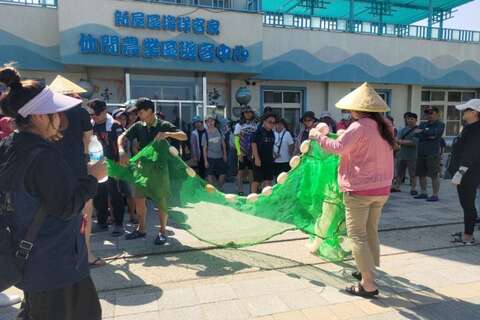
The operation of Qian Gu works as follows: the "Gu Shou" (net watcher) responsible for observation would blow a conch shell to issue a gathering call when they spotted a school of fish from the shore. At this signal, villagers of all ages and genders would put down their tasks and gather at the beach. A sampan would be ready on shore, and the captain would burn incense and pray at the bow before setting off with the dragnet, casting the net at an appropriate distance in the sea. A typical Gu net is about 150 meters long (approximately 200 meters including the thick hemp rope on shore), with floats on the surface and sinkers below, forming an inescapable net in the water.
Then, when the timing was right, the villagers called "Hai Jiao" (or "Gu Zai Jiao"), who had already formed two lines on the left and right on shore, would pull together on command, engaging in a tug-of-war with the sea to haul all the fish in the net onto the shore. Although the fishing net has holes, once in the water, the combined weight of the catch and sinkers is quite considerable, and the net cannot be retrieved without enough manpower. Large-scale Qian Gu fishing nets could even involve over a thousand people working together. Therefore, this is a fishing method that requires extensive human cooperation and high community cohesion. If there isn't enough manpower, or if the dragging speed is too slow, the fish that entered the net have a chance to escape. If the two sides retrieve the net at different speeds - one fast and one slow - even more fish might escape.
After the task is completed, all villagers who participated in Qian Gu, regardless of gender and age, receive a share of the catch. This is what tradition calls "sharing fish by the rope." This principle ensures everyone's tacit understanding of participating and cooperating together. Interestingly, in the past when there were multiple different Qian Gu teams along the coast, to prevent people from different settlements from confusing "gathering calls," each team's conch sound would be distinctive!
Qian Gu Experiences in Northern Taiwan
The Qian Gu seen today has mostly transformed into cultural heritage preservation and leisure experiences. In northern Taiwan, including Jinshan and Wanli in New Taipei, as well as the Xinwu coast in Taoyuan, Qian Gu experience activities are held.
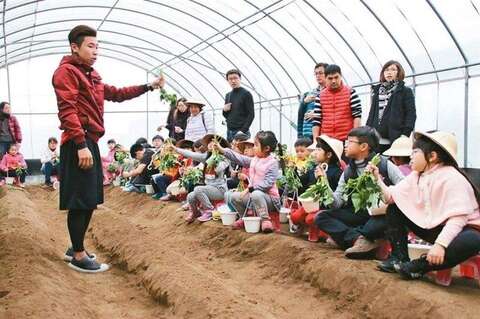
Next to the Jiatou Activity Center (Sheng'an Temple) in Wanli District, New Taipei City, Qian Gu experiences are organized on some weekends from May to August in summer (almost every weekend during summer vacation), with 40 to 100 participants per session. Registration is available through platforms like "Jinshan Roaming." July to September is also the season for the "Jinshan Sweet Potato Festival," during which the district office holds a series of events including earth kiln cooking for thousands of people. Visitors can also go to Wang Wang Sweet Potato Farm to get close to the soil, or taste treats like sweet potato pudding cake and purple sweet potato soft serve ice cream.
Taoyuan's Qian Gu experience activities are held on the coast of Xinwu District, in conjunction with major events such as "World Oceans Day" and "Hakka Sea Festival." Although Qian Gu experiences are not always available, the Ocean Hakka Leisure Agriculture Area has a permanent "Ocean Hakka Qian Gu Culture Museum" locally, helping visitors learn about this traditional fishing method.
The general impression is that Hakka people more often live in hilly and mountainous areas, with less connection to the sea. However, Xinwu is a "Sea Hakka" settlement, home to "Yong'an Fishing Harbor," Taiwan's only Hakka fishing harbor. The "Yong'an Conch Cultural Experience Park" next to the fishing harbor has a "Fishing Village Hakka Story Museum," providing detailed introductions to Sea Hakka culture, including differences from Mountain Hakka in terms of cuisine, beliefs, and vocabulary.
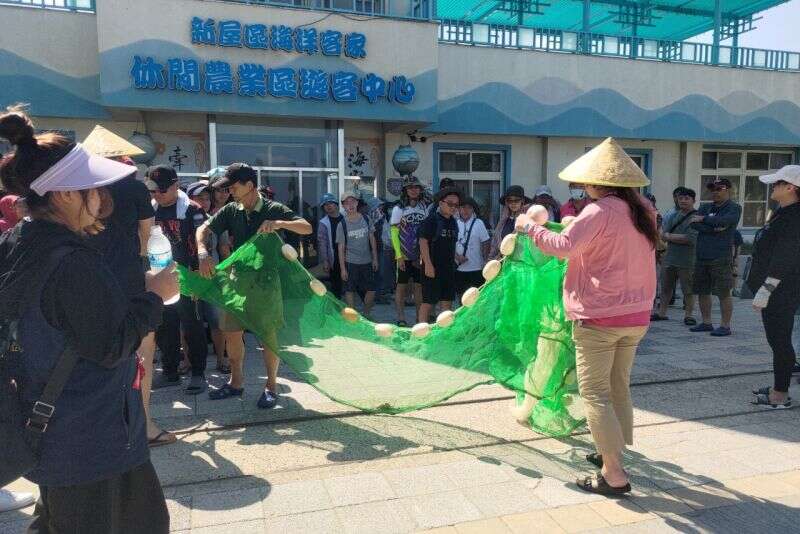
Ocean Hakka Leisure Agriculture Area (Photo provided by Ocean Hakka Association)
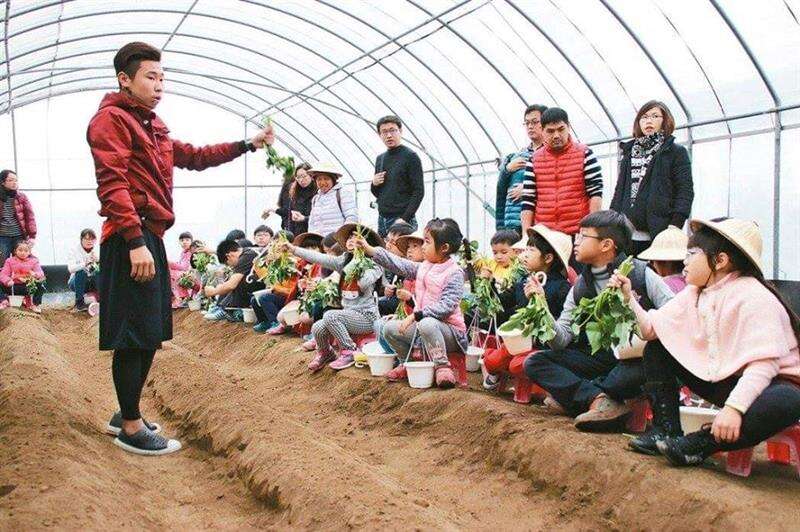
In summer on New Taipei's coast, besides Qian Gu, you can also participate in Sweet Potato Festival activities
Yilan Qian Gu Plus Diverse Agritourism Experiences
Coming to the east coast, it is said that the people who followed Wu Sha to develop Kavalan also brought the Qian Gu fishing method to eastern Taiwan, with traces even reaching as far as Hualien and Taitung. However, with the rise of fishing boat operations, Qian Gu disappeared from Yilan's shores for about 40 years. Today, Qian Gu experience opportunities are available through the Gangkou Community Development Association in Toucheng, Yilan, as well as the Houpi Community and Buhou Community in Zhuangwei.
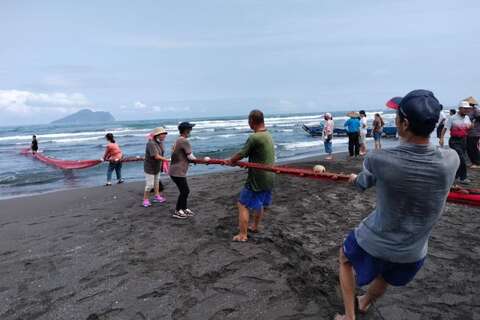
The Gangkou Community Development Association combines the efforts of community elders. If visitors are in groups of 30 or more, they can contact the development association between April and October each year for customized activities at Gang'ao Beach on the north side of Wushipi Harbor. While participating in Qian Gu activities, visitors can also enjoy views of Guishan Island and the blue sea and sky.
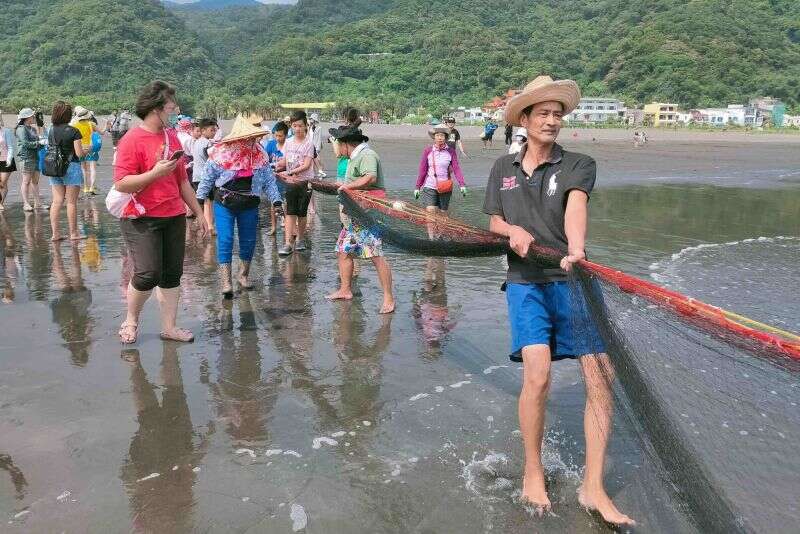
Qian Gu at Gang'ao Beach in Toucheng, Yilan (Photo provided by Yilan County Toucheng Township Gangkou Community Development Association)
The local "Xingang'ao Leisure Agriculture Area" is Taiwan's only leisure agriculture area covering both agriculture and fisheries, promoting various agricultural and fishing experiences that combine mountain and sea characteristics. The nearby Toucheng Leisure Farm offers rich agritourism activities including fruit picking, rice transplanting, getting close to cute animals, and ecological observation. Along the coastal highway, Gengfang Fishing Harbor, Daxi Fishing Harbor, and Wushi Fishing Harbor are great places to buy seafood and enjoy fresh catches nearby.
Extended Reading:
Bikes First: Leisure Agriculture Area Cycling Tours - Taoyuan Ocean Hakka, Chiayi Nanbeigang, Pingtung Yanshan
My Family Has Three Treasures - The Big Three Agricultural Products from Various Regions
This content was translated by AI. Please refer to the original text if you have any concerns.
Photos