Ocean Encounter: Donggang King Boat Festival
Posted Date:2025-01-02
Updated:2026-01-20
Popularity
817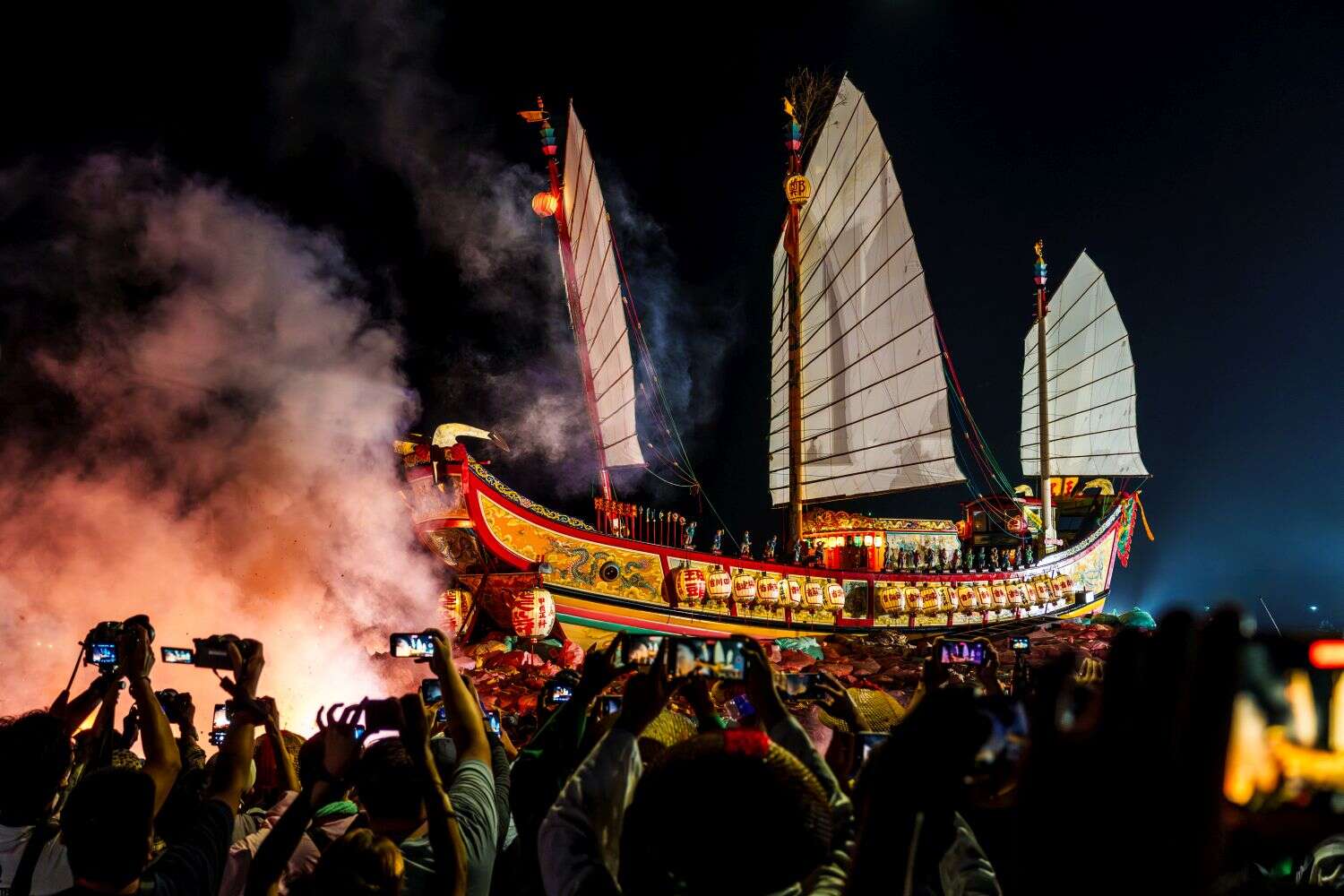
The Donggang King Boat Festival is an important traditional folk activity in Donggang Township, Pingtung County, with profound historical and cultural significance. It is also the most representative tourism event of this fishing port town. The grand finale of the festival - the "Burning of the King Boat" - is one of Taiwan's most famous folk activities. This religious and cultural event was designated as a "National Important Folk Cultural Asset" by the Ministry of Culture, Executive Yuan in 2010.
The King Boat Festival has been designated as a National Important Folk Cultural Asset
History and Significance of the Festival
The "King" in the King Boat Festival refers to Wang Ye (Royal Lords), reflecting the Wang Ye Qiansui belief common in coastal areas of Fujian and Taiwan. The core figure of the Wang Ye belief is said to be Wen Hong, who was granted a title during the Tang Dynasty for his meritorious service in protecting his lord. However, he later perished in a shipwreck, and upon reaching the heavenly realm, was appointed by the Jade Emperor as a "Qiansui Ye" (Millennial Lord) serving as "Heavenly Inspector" - essentially the Jade Emperor's imperial envoy, specifically dispatched to the mortal world to subdue evil spirits and drive away plagues. He is also known as Wen Fu Qiansui.
During the Ming Dynasty, plagues frequently broke out along the Fujian coast every summer, so people built temples for Wen Fu Qiansui, praying to the Royal Lord to drive away plagues and protect those working at sea. This gradually formed the folk Wang Ye belief, which together with Mazu, became the two major belief systems for coastal areas and fishermen.
The history of Donggang's King Boat Festival can be traced back to around 1684 during the Kangxi era of the Qing Dynasty, giving it a history of over 300 years. It is held once every three years in principle. The original reason for holding the festival was related to local plague outbreaks, with residents praying for peace through the "Welcoming the King and Sending Away Plagues" ritual. The main context involves welcoming five Qiansui Ye (Royal Lord deities) dispatched by the Jade Emperor to sweep away plagues and drive out evil spirits, along with the Zhongjun Fu who serves as their vanguard, plus Wen Fu Qiansui who permanently resides in Donggang as the main deity worshipped at Donglong Temple. These seven deities together protect the peace and prosperity of the local area.
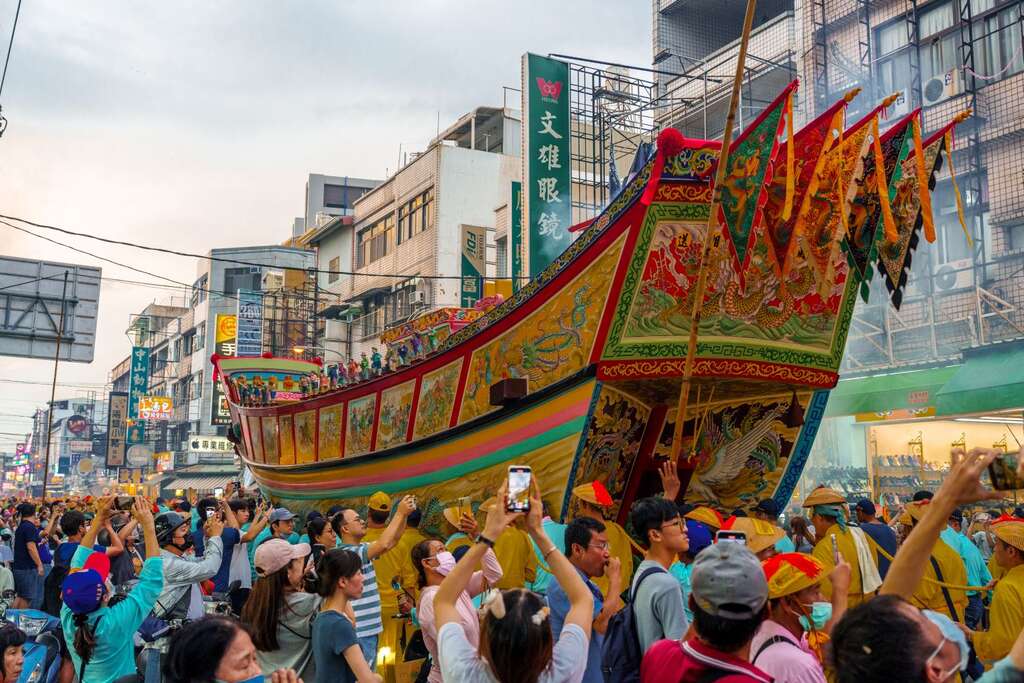
Residents pray for peace through the "Welcoming the King and Sending Away Plagues" ritual
Eight Days of Rich Rituals
The Donggang King Boat Festival is mainly conducted over eight days and seven nights, roughly including: Inviting the King, Procession, King Boat Ceremony and Honoring the King, Moving the Boat Procession, and finally the Sending Off the King ritual.
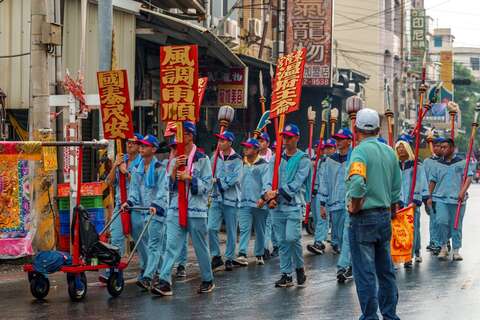
The Inviting the King ceremony on the first day is held at the beach of Zhenhai Park, symbolizing the arrival of the Royal Lords and marking the official start of the festival. This is followed by four days of procession activities, during which the Qiansui Ye's palanquins tour around various parts of Donggang, allowing the Qiansui Ye to inspect the area, drive away misfortune, and bring blessings and protection to residents.
The palanquin teams of the seven Royal Lords are assigned to seven local "Jiao Tou" temples in Donggang, with each Royal Lord's team wearing different colored clothing to distinguish their roles. Participation in the procession is not limited to local troupes - for example, the 2024 Jiachen King Boat Festival saw 168 teams from temples across the country joining the celebration.
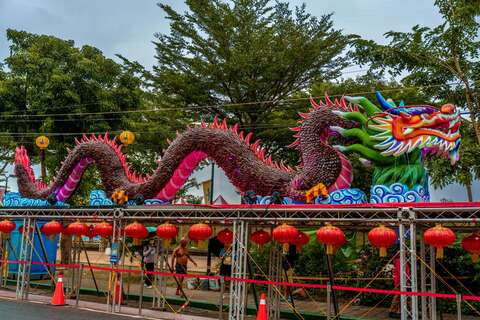
Meanwhile, beside Donggang Riverside Park, the organizers created a "Double Dragons and Double Phoenixes" display using 1,600 catties of mullet roe and 500 catties of squid, showcasing the generous style of fishing village residents - a sight you won't see at typical rural festivals!
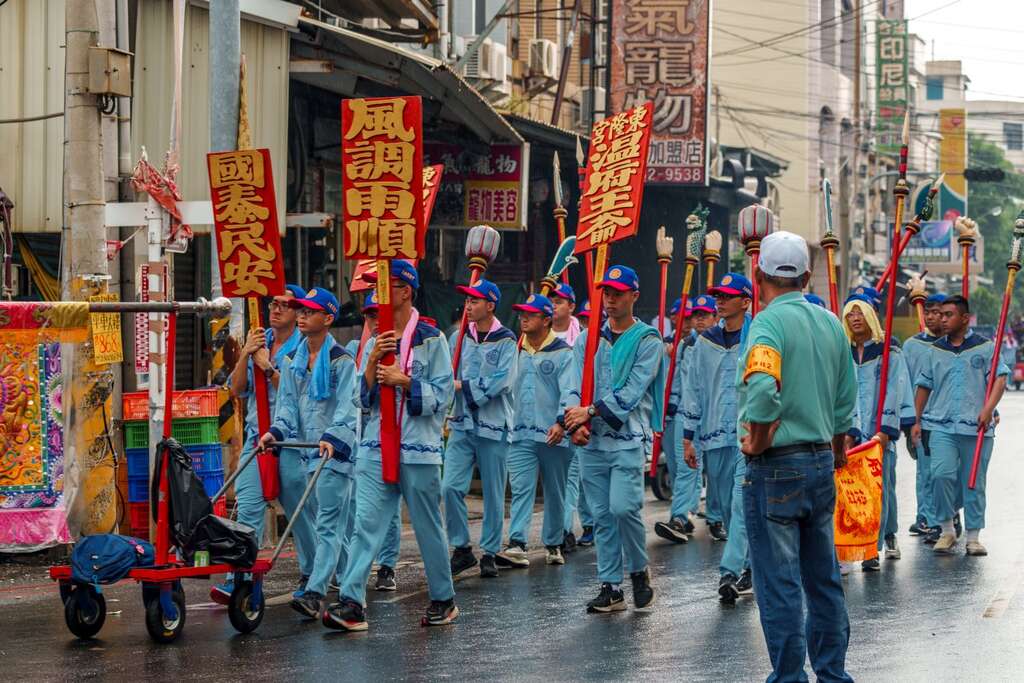
Each Royal Lord's palanquin team wears different colors (blue is for Wen Fu Wang Ye)
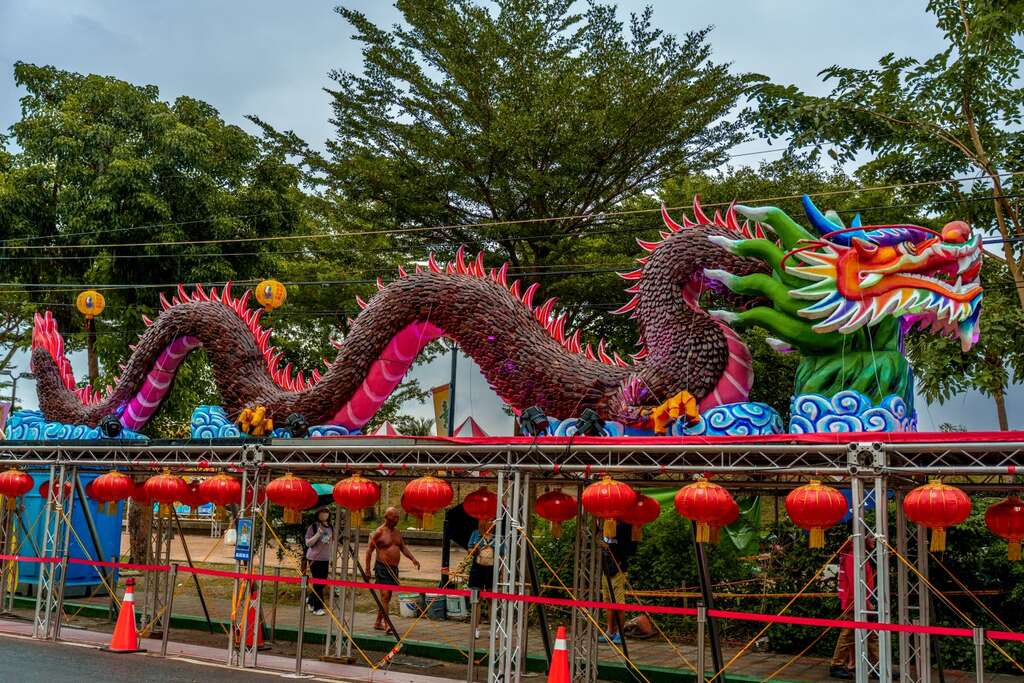
The dragon scales of the "Double Dragons and Double Phoenixes" are made of mullet roe, distributed as blessed gifts after the festival
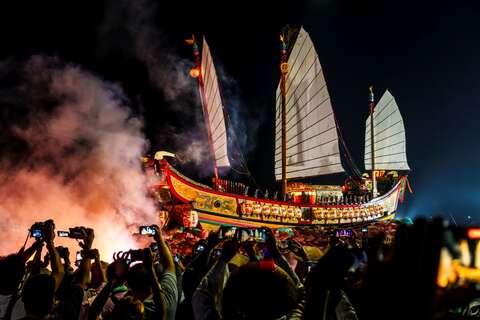
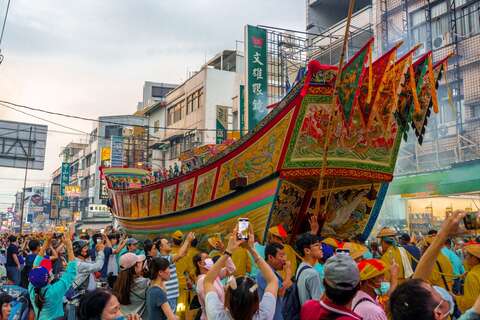
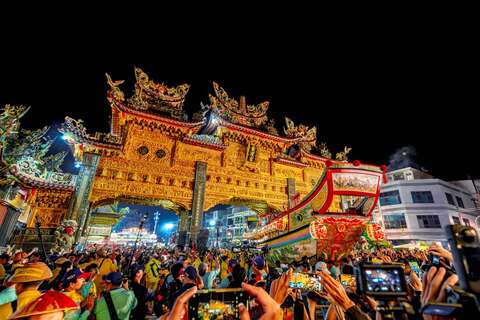
On the sixth and seventh days, the King Boat Ceremony and Moving the Boat: the exquisite King Boat specially crafted for the festival is paraded on land through the Moving the Boat ceremony, touring around Donggang. The finale of the Moving the Boat ceremony - "King Boat Returns to the Temple" - seeing the King Boat pass through the archway of Donglong Temple, is another highlight of the entire ritual.
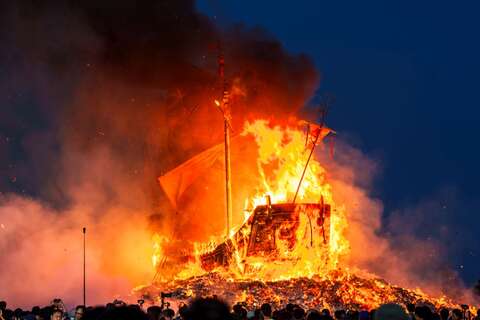
The Sending Off the King ceremony held at dawn on the last day at Zhenhai Park beach is the most famous "Burning of the King Boat" stage. This ritual signifies that the Qiansui Ye and Zhongjun Fu have completed their mission and are returning to the heavenly realm, taking the world's plagues and disasters with them. The spectacular burning of the King Boat attracts large numbers of devotees and tourists, representing the climax of the festival.
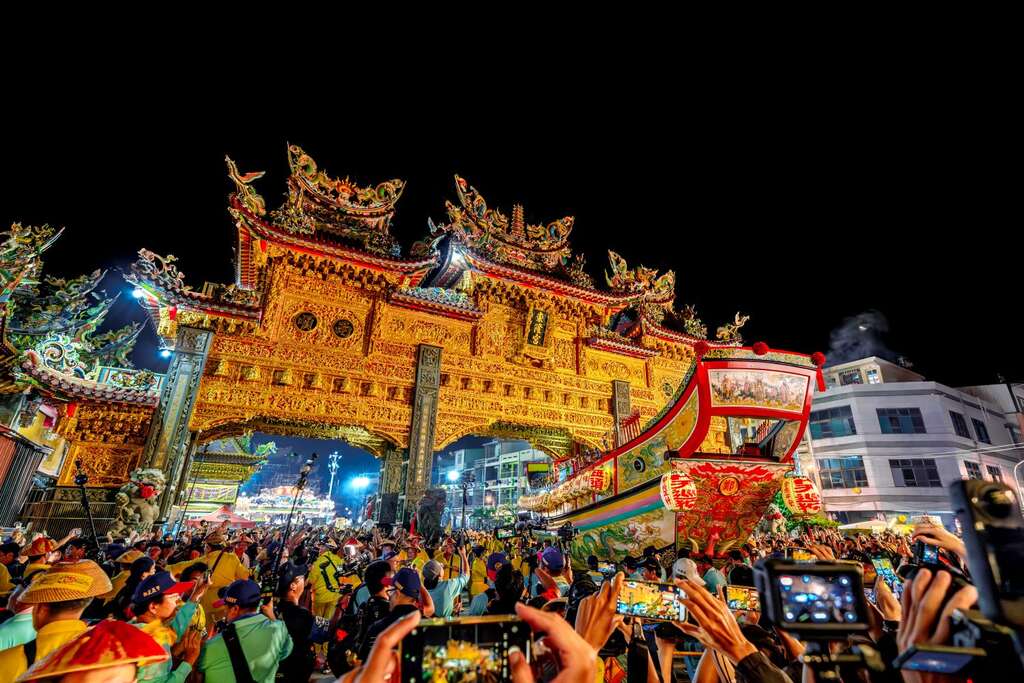
The King Boat returning to the temple and passing through Donglong Temple's archway is another highlight
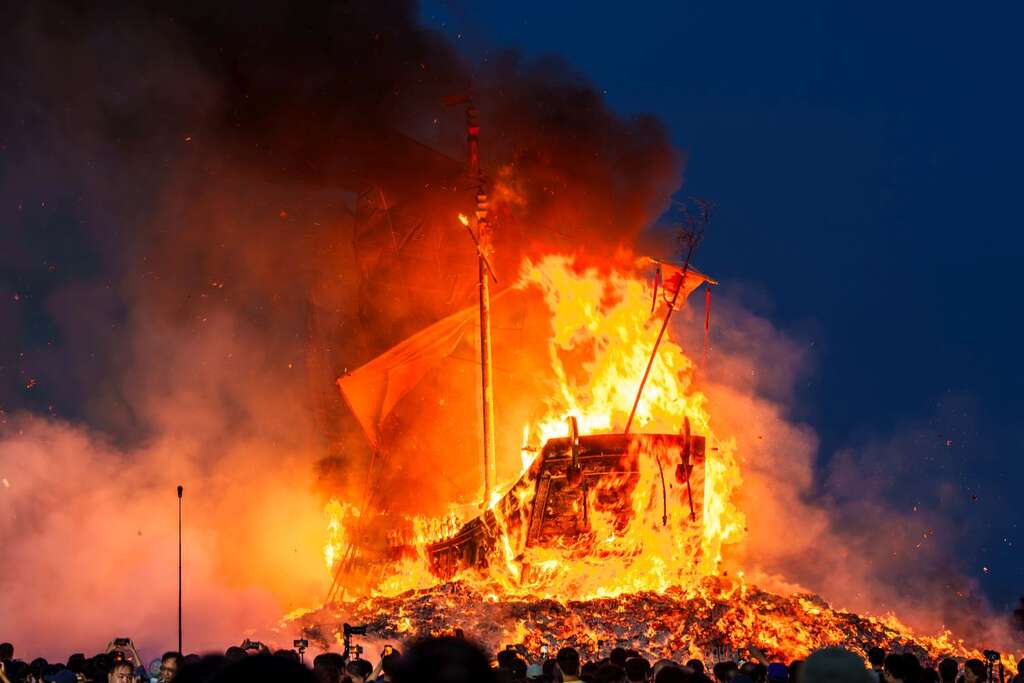
Burning the King Boat is the ritual for sending the Qiansui Ye back to the heavenly realm
Strolling Through Donggang to Discover Fishing Village Culture
The Donggang King Boat Festival has become an important part of Taiwan's representative cultural festivals, combining history, religion, and community spirit to express people's prayers for peace. Its rich rituals also attract numerous tourists from afar, promoting the local economy.
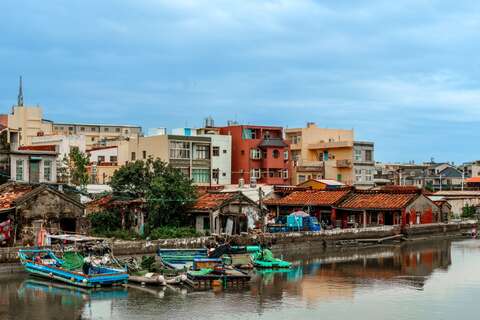
Visitors may not be able to visit every corner of Donggang like the procession palanquin teams and enjoy the generous seafood prepared by the temples, but they can still arrange some time to stroll through Donggang's streets. Near Fengyu Bridge, the inner harbor offers scenes of traditional houses alongside tube rafts, evoking the atmosphere of an old fishing village.
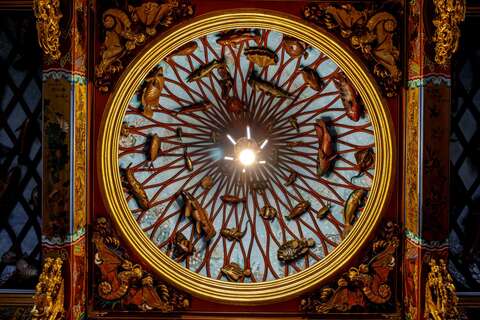
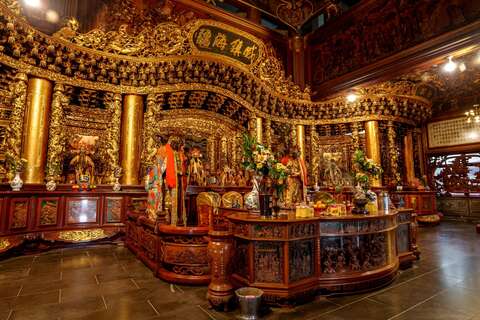
Zhenhai Temple, which mainly worships Su Fu Qiansui, is a temple with strong fishing village character. The "Wave Shrine" in the main hall is a major visual highlight - this wave-shaped structure is not a traditional architectural technique, but rather craftsmen applying shipbuilding technology on land to "bend" this rare masterpiece. The caisson ceiling in the worship hall also features fishing nets and various fish as its theme.
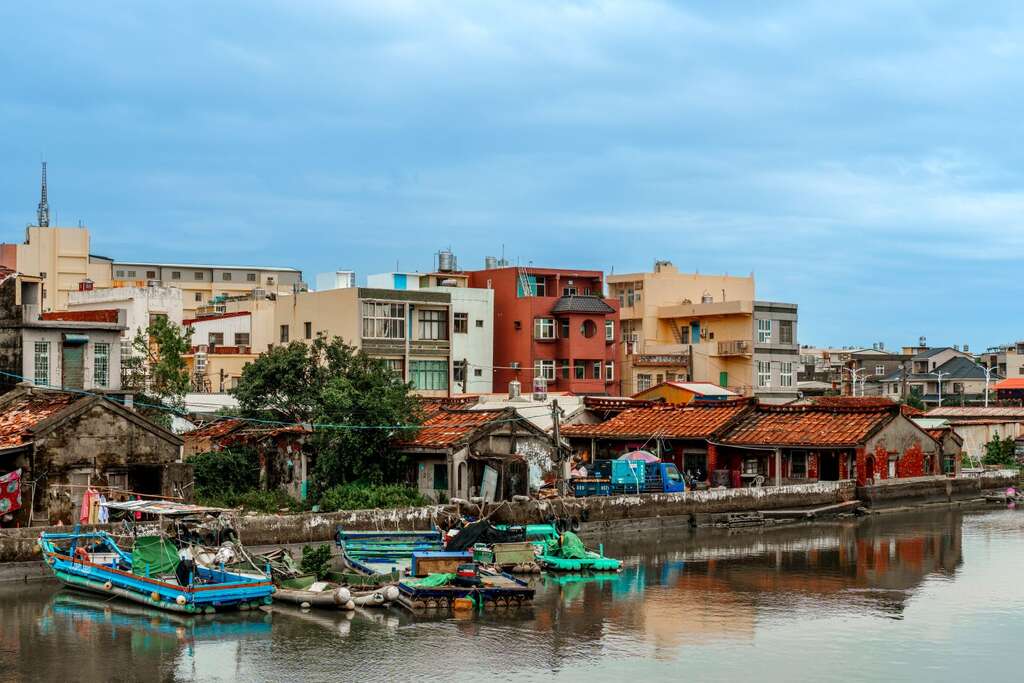
The harbor near Fengyu Bridge evokes the atmosphere of an old fishing village
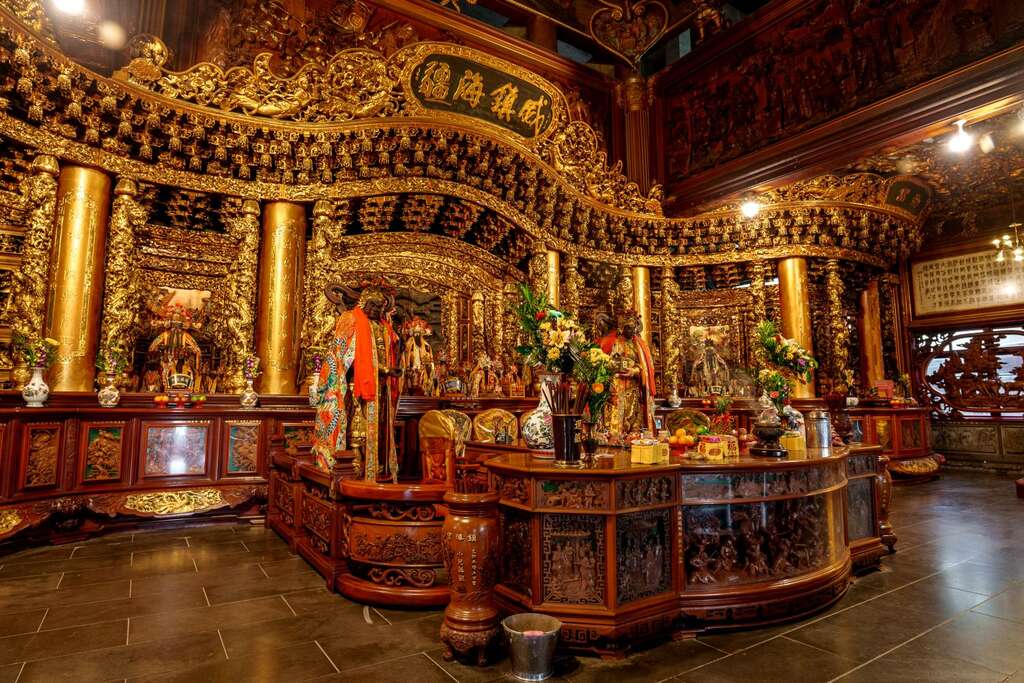
The "Wave Shrine" in Zhenhai Temple's main hall is an architectural work completed using shipbuilding technology
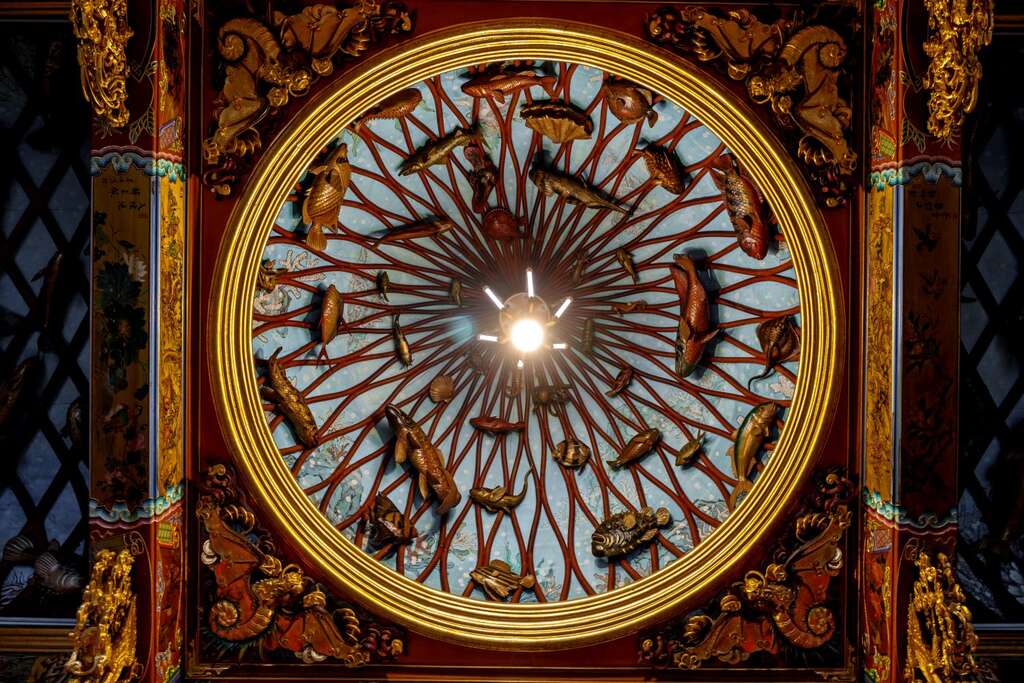
The caisson ceiling of Zhenhai Temple features fishing nets and various fish
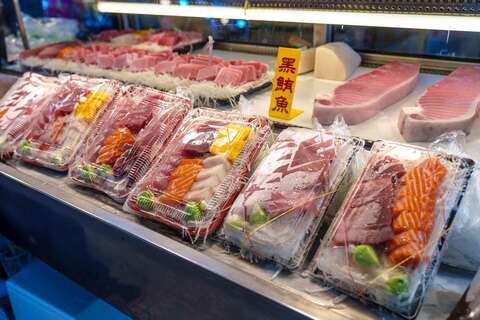
When you're tired from exploring, head to Huaqiao Market for some seafood to treat yourself. Don't miss the "Three Treasures of Donggang" - bluefin tuna, sakura shrimp, and mullet roe. Visitors can also go to Donggang Fishermen's Association to purchase various processed souvenir gifts. For those with a sweet tooth, Donggang's "Fuwan Plantation Leisure Farm" offers various high-quality cacao products that have won international chocolate competition awards. Whether spiritual or culinary rewards, participating in the King Boat Festival is surely an unforgettable experience for every visitor.
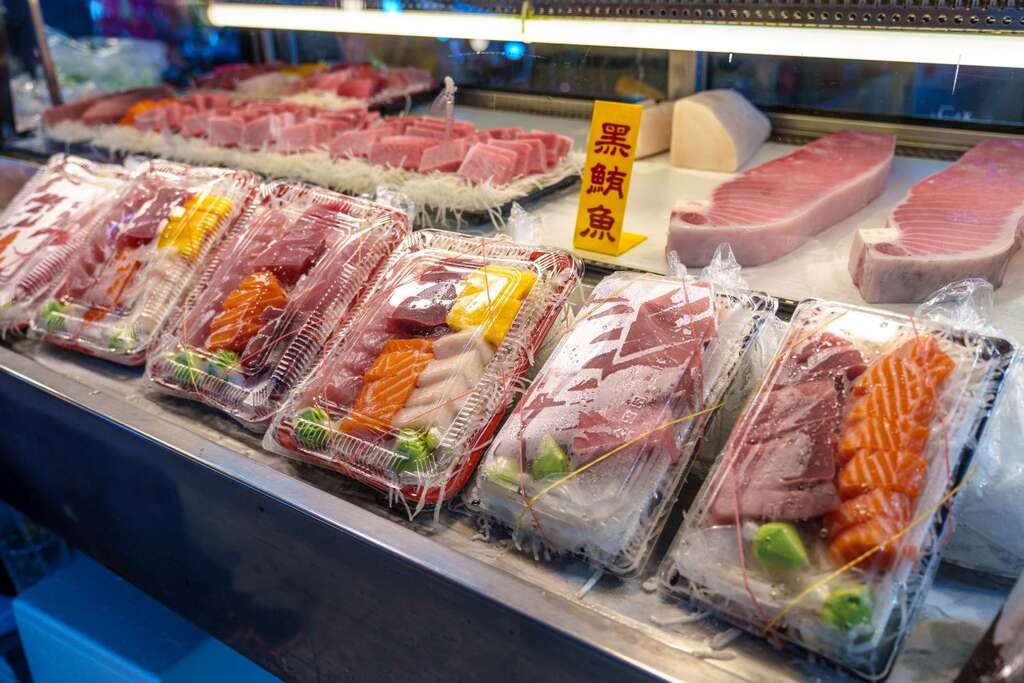
Visitors can taste seafood at the fishery products direct sales center commonly known as "Huaqiao Market"
Extended Reading:
Donggang Bluefin Tuna - A Stroll Through Fishing Village Food Culture
This content was translated by AI. Please refer to the original text if you have any concerns.
Photos